In today’s digital learning environment, Edgenuity Earth Science answers have become a topic of high interest for students striving to succeed in their coursework. Earth Science, a fascinating subject that combines geology, meteorology, oceanography, and astronomy, can sometimes feel overwhelming with its technical content and complex assessments. Edgenuity offers a structured path through these topics, but for many learners, navigating its lessons, quizzes, and unit tests demands more than just passive studying.
This guide dives deep into how students can understand and effectively work with Edgenuity’s Earth Science content—not just to find answers but to build lasting comprehension and academic confidence.
Understanding the Framework of Edgenuity Earth Science
Before diving into how students approach Edgenuity Earth Science answers, it’s crucial to understand how the platform delivers its content.
Edgenuity structures Earth Science into progressive units that include:
- Interactive lessons
- Embedded videos
- Virtual labs
- Assignments and quizzes
- Unit exams and cumulative assessments
Each section is designed to reinforce learning through engagement, repetition, and real-world application. Students often encounter difficulty not because of a lack of effort, but due to the dense nature of some concepts—especially in topics like plate tectonics, atmospheric circulation, and Earth’s internal structure.
Why Students Seek Edgenuity Earth Science Answers
Time pressure, information overload, and content complexity are the most common reasons students look for help. Earth Science covers a wide array of interconnected topics:
- The rock cycle and types of rocks
- Earthquakes, volcanoes, and tectonic activity
- Weather patterns and climate systems
- Astronomical influences on Earth
Some lessons require intense focus and may involve lengthy reading or problem-solving tasks. When students fall behind, the desire to catch up quickly leads them to search for Edgenuity Earth Science answers as a shortcut.
However, using answers without understanding the content can be short-lived. There’s a smarter way.
Smart Strategies for Navigating Earth Science on Edgenuity
Rather than simply copying answers, students can use powerful techniques to internalize concepts while still improving their grades. Here are some methods that blend effectiveness with academic honesty:
1. Use Active Note-Taking While Watching Videos
Edgenuity lessons contain instructional videos led by teachers. Many students watch passively—but this doesn’t lead to strong memory retention. Instead, write down:
- Definitions and key terms
- Real-world examples
- Questions that arise during the lesson
These notes become valuable when reviewing for quizzes and help you truly own the answers.
2. Work With Edgenuity’s Built-In Tools
Edgenuity isn’t just about watching and answering. It includes:
- E-notes: A digital notebook that stores your notes and can be used during quizzes.
- Glossary features: Perfect for revisiting key vocabulary.
- Progress trackers: Helpful to stay motivated and goal-oriented.
Make the most of these tools. They are more than accessories—they’re part of the learning engine.
3. Understand the Patterns in Questions
Edgenuity Earth Science answers often repeat certain themes, especially in multiple-choice sections. Recognizing patterns—like commonly used distractors (incorrect answers that sound right)—can help you better interpret the logic behind the questions.
Real Help Without Cheating: Where to Find Support
Looking for help doesn’t mean breaking rules. If you’re stuck, you can:
- Join study groups: Many students collaborate via Discord or school-supported forums.
- Use Earth Science textbooks: Standard books like Holt Earth Science mirror many topics on Edgenuity.
- Watch related YouTube channels: CrashCourse and National Geographic offer visual breakdowns of tough subjects.
These resources allow you to find the answers to Edgenuity Earth Science questions while also understanding the reasoning.
Top Concepts That Commonly Appear in Edgenuity Earth Science
To focus your efforts, here are some high-frequency topics where Edgenuity Earth Science answers are often sought:
Rock Cycle and Plate Tectonics
Students often struggle to differentiate between igneous, sedimentary, and metamorphic processes. Combine this with the theory of plate tectonics, and it becomes a complex web of Earth’s geological behavior.
Tip: Use diagrams. Sketch the cycle, label layers, and draw out plate boundaries.
Weathering, Erosion, and Soil Formation
Distinguishing mechanical and chemical weathering, or understanding how soil develops over centuries, is challenging. Don’t rely solely on definitions. Use examples from your local environment.
Atmospheric Layers and Weather Patterns
Questions often involve:
- The function of the ozone layer
- Convection currents
- The Coriolis effect
Tip: Create a table to compare the troposphere, stratosphere, mesosphere, thermosphere, and exosphere.
Ocean Currents and the Water Cycle
Understanding salinity, thermohaline circulation, and how oceans influence climate is essential.
Tip: Use case studies like El Niño and La Niña events to grasp real-world impacts.
Astronomy and Space Science
Expect to encounter:
- Moon phases
- Earth’s rotation and revolution
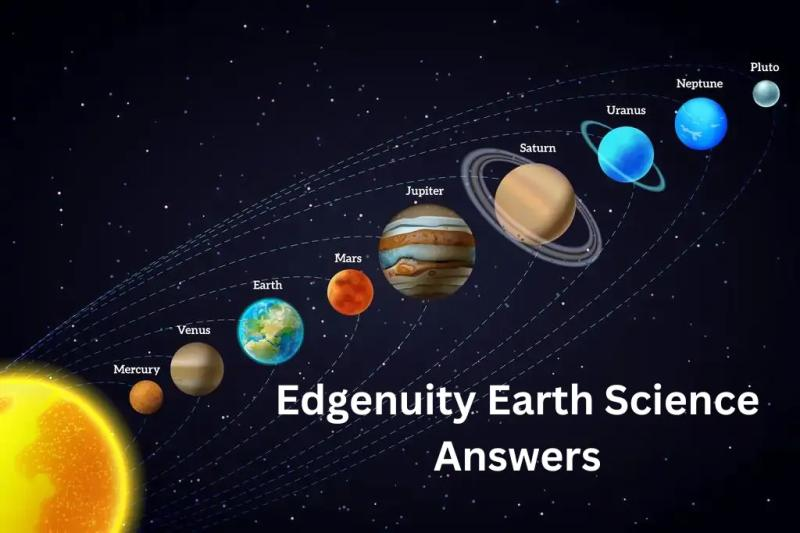
- Solar system structure
Tip: Use apps like Stellarium to visualize astronomical movements.
Avoiding the Pitfalls of Quick Fixes
It’s tempting to search for simple lists of Edgenuity Earth Science answers, but be cautious:
- Unverified answer banks may include outdated or incorrect answers.
- Plagiarizing responses on essay or short answer sections can flag your account.
- Skipping learning now can cost you on cumulative exams or standardized testing.
Instead, use answer guides as support, not substitutes.
What to Do If You’re Falling Behind in Edgenuity Earth Science
Falling behind isn’t uncommon. Earth Science modules can be dense, especially when balancing other courses.
Here’s a plan to catch up without stress:
1. Set daily goals
Break lessons into manageable chunks. Even completing one or two activities per day can help you get back on track.
2. Focus on quizzes and unit tests first
These carry the most weight. If you understand these sections, your overall grade will rebound faster.
3. Use weekends for review
Dedicate a few hours on weekends to review older modules. Create your own mini “catch-up camp.”
Benefits of Mastering Earth Science Instead of Memorizing Answers
Mastery leads to better outcomes in:
- College readiness: Earth Science builds foundational knowledge for geology, environmental science, and geography majors.
- Standardized tests: Many national assessments include Earth systems.
- Real-world awareness: Understanding how the planet works empowers better decisions as global citizens.
So, while it’s okay to look for help, investing in your learning pays dividends far beyond the classroom.
Final Thoughts: A Smarter Way to Use Edgenuity Earth Science Answers
Edgenuity Earth Science answers don’t have to be a crutch. When used responsibly, they can be stepping stones toward better understanding. If you’re using answer guides to verify your work, check your reasoning, or highlight areas to improve—then you’re using the system well.
But more importantly, Earth Science is a subject that offers a new way of seeing the world—from the soil beneath your feet to the stars above. Don’t miss the opportunity to explore it deeply.