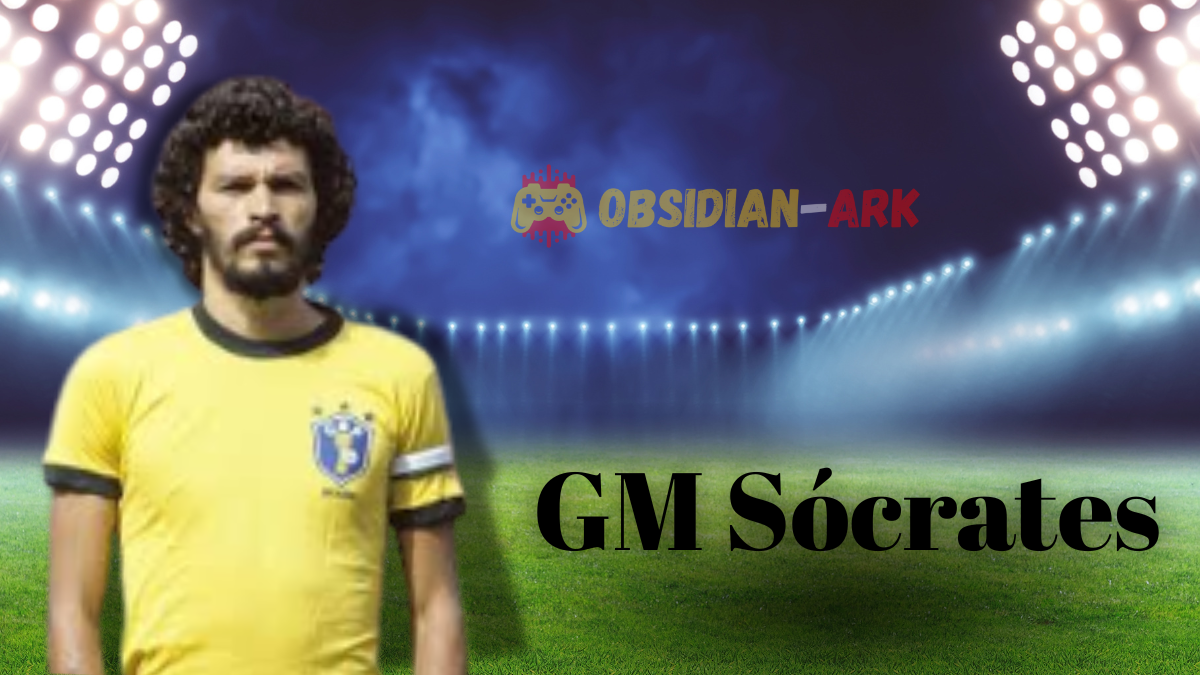
Brazil has produced countless football icons, but few carried the intellectual depth, political voice, and artistic brilliance of GM Sócrates. Known simply as Sócrates Brasileiro Sampaio de Souza Vieira de Oliveira, he stood apart from the typical image of a football star. Tall, elegant, philosophical, and deeply committed to social ideals, gm sócrates became one of the most fascinating figures in the history of the sport.
While many players were celebrated purely for goals or trophies, gm sócrates built a legacy that blended football brilliance, intellectualism, leadership, and activism. His style on the pitch was poetic; his influence off it was powerful. Even decades after his playing career, the legend of gm sócrates continues to inspire fans, athletes, scholars, and historians across the world.
Early Life and the Formation of a Thinker
The story of gm sócrates begins in Belém, Brazil, where he was born on February 19, 1954. His upbringing was different from many football stars who grew up in poverty. His father, Raimundo Sócrates, was a government employee and passionate reader who filled the household with books.
From an early age, young Sócrates was surrounded by literature, philosophy, and political discussions. These influences shaped the intellectual curiosity that would later define gm sócrates both on and off the field.
When Brazil fell under military dictatorship in the 1960s, his father famously burned many books out of fear of government persecution. This moment deeply affected the young Sócrates and helped form his lifelong commitment to freedom and democracy.
Even while developing as a footballer, education remained central to his life.
Key early influences that shaped gm sócrates:
- A household rich with books and philosophical discussion
- Exposure to political tensions during Brazil’s dictatorship
- Strong encouragement toward education and independent thinking
- Early passion for football combined with academic ambition
Unlike most athletes, gm sócrates pursued higher education seriously. He studied medicine at the University of São Paulo and eventually became a qualified physician. Because of this remarkable combination, fans affectionately nicknamed him “Doctor Sócrates.”
University Years and Football Development
While attending medical school in Ribeirão Preto, gm sócrates began playing for the local club Botafogo-SP. His football skills developed rapidly, but his style already showed unique characteristics.
Instead of relying purely on speed or athleticism, gm sócrates relied on intelligence, positioning, and extraordinary vision.
Standing at around 1.92 meters (6 ft 3 in), he had the build of a striker, yet his mind operated like a playmaker. He moved gracefully across the midfield, orchestrating attacks with effortless precision.
His famous no-look passes, delicate backheels, and perfectly weighted through balls quickly became his trademarks.
During this period, gm sócrates began demonstrating the qualities that would define his entire career:
- Tactical awareness far ahead of his time
- Creativity in tight spaces
- Leadership and communication with teammates
- Calmness under pressure
By the late 1970s, Brazilian clubs had begun to notice the brilliance of gm sócrates, and his next move would change the course of Brazilian football history.
Corinthians and the Birth of a Football Revolution
In 1978, gm sócrates joined Corinthians, one of Brazil’s largest and most passionate clubs. What happened during his years there was not just football success—it was a cultural movement.
Together with teammates like Wladimir, Casagrande, and Zenon, gm sócrates helped establish what became known as Corinthians Democracy.
This initiative transformed the club into a rare democratic institution during Brazil’s military dictatorship.
Instead of decisions coming only from club executives, players and staff voted on matters such as:
- Training schedules
- Transfers
- Team rules
- Club policies
Every member of the club had a voice.
At the center of this movement stood gm sócrates, who believed football could be a platform for social change.
He famously wore jerseys with the word “Democracia” during matches, sending a powerful message across Brazil.
Major achievements of gm sócrates at Corinthians:
- São Paulo State Championship titles (1982 and 1983)
- Establishment of one of football’s most famous democratic movements
- Development of an attacking and creative playing style
- Becoming the symbolic leader of the club
Fans adored him not only for his football skills but also for his courage in speaking about politics and freedom.
The Unique Playing Style of GM Sócrates
Watching gm sócrates play football felt different from watching other players. His movements were calm, deliberate, and intelligent.
He rarely rushed. Instead, he seemed to slow the game down, analyzing possibilities before making elegant decisions.
Signature elements of gm sócrates’ style
1. Backheel mastery
One of his most iconic skills was the backheel pass. While most players used it occasionally, gm sócrates turned it into an art form.
His backheels were precise, creative, and often unexpected, opening defenses instantly.
2. Vision and spatial awareness
He had the rare ability to see passing lanes before they appeared. Teammates trusted his instincts completely.
3. Intelligent movement
Despite his tall frame, gm sócrates moved with remarkable fluidity, often drifting into spaces that defenders failed to anticipate.
4. Leadership on the pitch
He organized attacks, encouraged teammates, and controlled the tempo of matches.
5. Composure under pressure
High-pressure moments never seemed to rattle him.
These characteristics made gm sócrates one of the most elegant midfielders in football history.
International Glory with Brazil
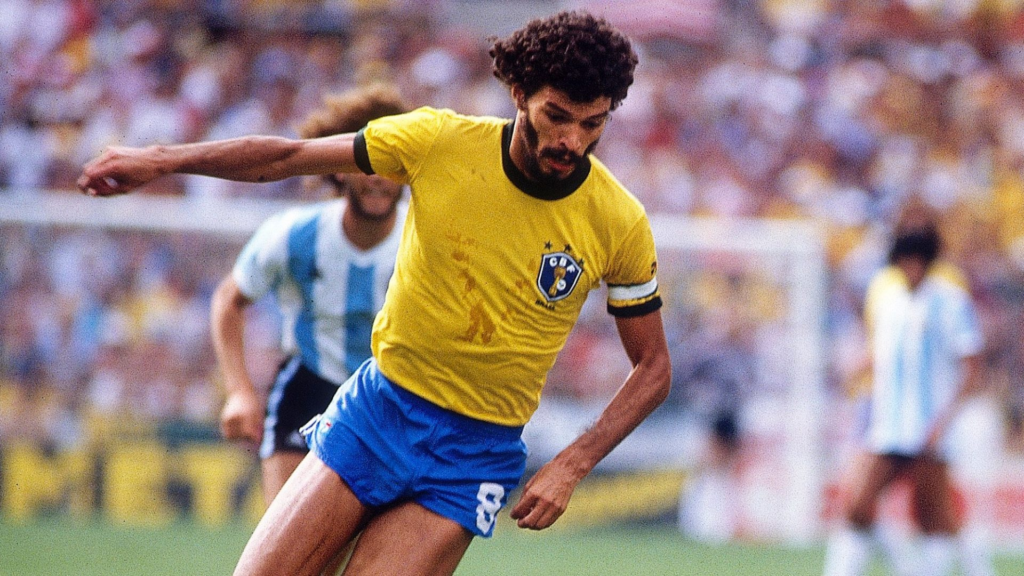
No discussion of gm sócrates is complete without mentioning his role in the legendary Brazil 1982 national team.
That squad is often regarded as one of the greatest teams that never won the World Cup.
Led by coach Telê Santana, Brazil played an attacking style built on creativity and technical brilliance.
The team featured stars such as:
- Zico
- Falcão
- Éder
- Junior
- gm sócrates
As captain of the team, gm sócrates symbolized the philosophy of beautiful football.
During the 1982 World Cup in Spain, Brazil dazzled fans with spectacular attacking play. Their matches were thrilling displays of skill and imagination.
One of the most memorable moments came when gm sócrates scored against the Soviet Union with a tight-angle shot that stunned the goalkeeper.
Although Brazil ultimately lost to Italy in the famous 1982 “Sarriá Stadium” match, the legacy of that team remains legendary.
Many historians still believe that the 1982 Brazilian side, led by gm sócrates, represented the purest form of attacking football ever seen at a World Cup.
European Adventure with Fiorentina
In 1984, gm sócrates moved to Italy to play for Fiorentina in Serie A. European football at the time was extremely tactical and defensively oriented, which contrasted sharply with the expressive Brazilian style.
While his stay lasted only one season, the experience showed the global appeal of gm sócrates.
Despite cultural and tactical differences, fans admired his intelligence and unique personality.
However, the European lifestyle never fully suited him, and he soon returned to Brazil to continue his career.
Life Beyond Football
What made gm sócrates truly extraordinary was his identity beyond the pitch.
He was not just a footballer. He was also:
- A medical doctor
- A political thinker
- A columnist and writer
- A social activist
Few athletes in sports history have balanced intellectual pursuits and professional sports as successfully as gm sócrates.
He frequently wrote articles discussing:
- Democracy
- Social justice
- Brazilian politics
- The cultural role of football
Even after retirement, he remained an influential voice in Brazilian public life.
Leadership and Philosophy
The philosophy of gm sócrates was deeply rooted in freedom, collective decision-making, and social responsibility.
He believed footballers had a duty to contribute positively to society.
His approach to leadership emphasized dialogue and equality rather than authority.
Core principles associated with gm sócrates:
- Respect for democracy
- Intellectual curiosity
- Collective responsibility
- Freedom of expression
- Social awareness in sports
These ideals helped shape one of the most unique leadership styles ever seen in football.
Personal Challenges and Human Complexity
Despite his brilliance, gm sócrates also faced personal struggles.
He was known for his love of nightlife and alcohol, habits that sometimes affected his physical condition. He openly acknowledged these challenges throughout his life.
Rather than hiding his imperfections, gm sócrates embraced honesty about his flaws. This authenticity made him even more relatable to fans.
His life reflected the complexities of a brilliant but deeply human individual.
Retirement and Continued Influence
After retiring from professional football in the late 1980s, gm sócrrates remained active in many areas.
He worked as:
- A football commentator
- A columnist
- A public speaker
- A doctor in some capacities
His insights into football tactics, politics, and culture made him a respected voice across Brazil.
Young players and fans continued to admire his intellectual approach to the game.
The Legacy of GM Sócrates
On December 4, 2011, Brazil lost one of its most iconic figures when gm sócrates passed away at the age of 57.
The news triggered an outpouring of tributes from around the world.
Corinthians fans honored him with emotional stadium tributes, and the Brazilian football community remembered him as more than just an athlete.
The legacy of gm sócrates includes several lasting contributions:
1. A new model of athlete-intellectual
He proved that footballers could be thinkers, activists, and scholars.
2. Symbol of football democracy
The Corinthians Democracy movement remains one of the most powerful examples of athlete-led social change.
3. Inspiration for creative football
His elegant playing style continues to influence modern attacking midfielders.
4. Cultural icon in Brazil
Beyond football, he became a symbol of resistance against authoritarianism.
Why GM Sócrates Still Matters Today
Modern football has become faster, more commercialized, and increasingly tactical. Yet the story of gm sócrates reminds the world that football can also be:
- Artistic
- Intellectual
- Socially meaningful
- Politically conscious
His life demonstrated that athletes can shape culture and society far beyond stadium walls.
For many fans, gm sócrates represents the ideal footballer: intelligent, creative, courageous, and deeply human.
Remembering the Doctor of Football
The nickname “Doctor Sócrates” perfectly captured the uniqueness of gm sócrates. Few individuals in sports history have combined medical education, political activism, philosophical thinking, and elite athletic performance.
He captained Brazil, revolutionized a major football club’s governance, dazzled fans with artistic playmaking, and spoke openly about democracy during one of Brazil’s most difficult political periods.