Installing specialized components like 35-ds3chipdus3 requires precision, preparation, and attention to detail. Whether you are integrating it into a larger system or using it as a standalone module, following the correct process ensures optimal performance, long-term stability, and minimal troubleshooting.
This guide provides a comprehensive walkthrough of how to install 35-ds3chipdus3, covering preparation, installation steps, configuration, optimization, and maintenance. Every stage is explained clearly so you can complete the process with confidence.
Understanding 35-ds3chipdus3 Before Installation
Before beginning the setup process, it’s important to understand what 35-ds3chipdus3 is designed to do and how it integrates with your system.
35-ds3chipdus3 is a specialized modular unit designed for performance control, data handling, and system synchronization across compatible environments. It typically functions as:
- A processing interface module
- A control signal distributor
- A performance enhancement chip
- A firmware-based integration unit
Because of its flexibility, installation may slightly vary depending on your system architecture. However, the core installation framework remains consistent.
System Requirements
Before learning how to install 35-ds3chipdus3, verify that your system meets these minimum conditions:
- Compatible motherboard or base unit
- Updated firmware
- Stable power supply
- Grounded workspace
- Administrative access (for software configuration)
Skipping compatibility checks often leads to initialization errors or device detection failure.
Tools and Preparation Checklist
Proper preparation reduces installation time and prevents avoidable mistakes.
Required Tools
Make sure you have:
- Anti-static wrist strap
- Precision screwdriver set
- Thermal compound (if required by your model)
- Cleaning cloth or compressed air
- System manual for reference
Pre-Installation Safety Measures
Safety is not optional. Before starting:
- Power off your system completely
- Disconnect all power cables
- Discharge residual electricity
- Work in a static-free environment
- Back up important data
Taking these precautions ensures that both the 35-ds3chipdus3 module and your main system remain protected.
Step-by-Step Guide: How to Install 35-ds3chipdus3
This section explains exactly how to install 35-ds3chipdus3 from start to finish.
Step 1: Power Down and Access the Internal Panel
- Shut down your device completely.
- Disconnect it from the main power source.
- Remove the system casing carefully using a precision screwdriver.
- Place screws in a secure location to avoid misplacement.
Important: Never attempt installation while the device is connected to power.
Step 2: Locate the Designated Slot
The 35-ds3chipdus3 module connects to a dedicated interface slot. Depending on your system model, this may be labeled as:
- DS3 Port
- Advanced Chip Interface (ACI)
- Modular Expansion Slot
- Secondary Processing Bay
If unsure, consult your motherboard diagram or device schematic.
Ensure the slot is clean and dust-free before insertion.
Step 3: Prepare the 35-ds3chipdus3 Module
Before inserting the chip:
- Inspect for visible damage
- Check connector pins for bending or debris
- Apply thermal compound if required
- Confirm orientation alignment markers
Most 35-ds3chipdus3 modules have a notch or alignment arrow. This ensures correct placement.
Never force the module into position.
Step 4: Insert the Module Securely
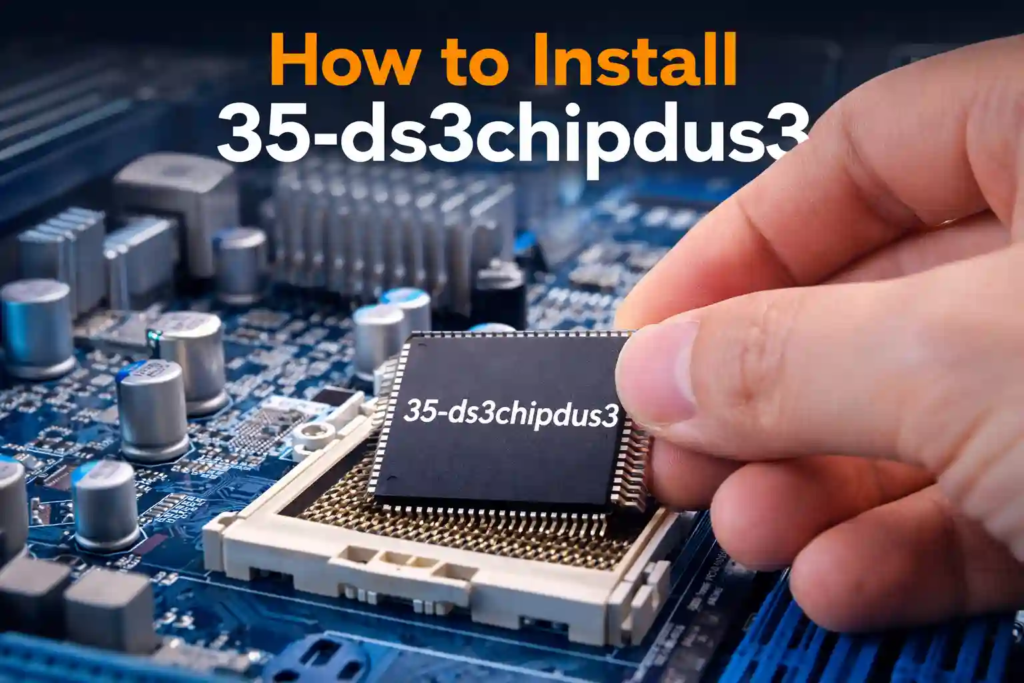
Carefully align the chip with the slot and apply even pressure.
You should feel:
- A gentle click
- A firm but smooth insertion
- No resistance beyond initial alignment
If resistance occurs, remove and recheck alignment.
Proper insertion ensures:
- Stable power flow
- Clean data transmission
- Reduced overheating risks
Step 5: Secure the Module
Use screws or locking clips (depending on your system) to secure the module.
Make sure:
- The chip is level
- There is no tilting
- It does not move when lightly touched
Loose installation may cause intermittent system failure.
Step 6: Reassemble the System
Once installed:
- Replace the casing.
- Secure all screws tightly.
- Reconnect cables.
- Restore power supply.
You are now ready for software configuration.
Software Configuration After Installation
Knowing how to install 35-ds3chipdus3 physically is only half the process. Configuration ensures full functionality.
Step 1: Boot the System
Turn on your device and observe the boot process.
Look for:
- New hardware detection prompt
- Initialization message
- Firmware update suggestion
If no detection occurs, revisit the hardware installation.
Step 2: Install Required Drivers
Many systems automatically detect 35-ds3chipdus3. If not:
- Insert the driver disk (if provided)
- Download drivers from the manufacturer’s official source
- Run installation as administrator
- Restart system after installation
Never install drivers from unverified sources.
Step 3: Configure System Settings
After driver installation:
- Access system BIOS or UEFI (if required)
- Enable external module support
- Set 35-ds3chipdus3 as primary or secondary controller (if applicable)
- Save and exit
In operating system settings:
- Verify device recognition
- Enable performance mode
- Adjust processing priority if necessary
Step 4: Perform Initial Calibration
Calibration optimizes performance.
Run:
- Hardware diagnostic tool
- Performance benchmark utility
- Stress test for 5–10 minutes
Monitor:
- Temperature levels
- Signal stability
- Data transmission rate
If values exceed safe limits, check cooling setup.
Advanced Optimization for Maximum Performance
After understanding how to install 35-ds3chipdus3 and completing setup, you can enhance its output through optimization.
Cooling Enhancements
High-performance modules generate heat. Consider:
- Additional cooling fans
- Improved airflow design
- Thermal pads
- Liquid cooling systems (advanced setups)
Maintaining optimal temperature significantly extends lifespan.
Firmware Updates
Manufacturers periodically release updates to:
- Improve compatibility
- Fix bugs
- Increase efficiency
- Enhance security
Always check for firmware updates every few months.
Power Management Settings
Adjust power settings for efficiency:
- Enable adaptive power mode
- Avoid overclocking without proper cooling
- Monitor voltage consistency
Stable power equals stable performance.
Troubleshooting Common Installation Issues
Even when following instructions carefully, minor issues may arise. Here are common problems and solutions.
System Does Not Detect 35-ds3chipdus3
Possible causes:
- Improper insertion
- Outdated BIOS
- Driver installation failure
Solutions:
- Re-seat the module
- Update BIOS
- Reinstall drivers
Overheating After Installation
Causes:
- Insufficient cooling
- Excess thermal paste
- Poor airflow
Solutions:
- Improve ventilation
- Reapply thermal compound
- Install additional cooling units
Performance Instability
Symptoms include:
- Random shutdowns
- Freezing
- Lag spikes
Fixes:
- Check power supply capacity
- Run diagnostic tools
- Reset system configuration
Maintenance and Long-Term Care
Learning how to install 35-ds3chipdus3 is just the beginning. Ongoing maintenance ensures durability.
Monthly Checks
- Inspect for dust buildup
- Monitor performance metrics
- Check connection tightness
Quarterly Maintenance
- Clean internal components
- Recheck firmware updates
- Run full system diagnostics
Annual Deep Maintenance
- Replace thermal compound
- Evaluate cooling efficiency
- Check for hardware wear
Preventive care avoids expensive repairs.
Best Practices for Safe Handling
To prevent damage:
- Avoid touching connector pins
- Store unused modules in anti-static packaging
- Keep away from moisture
- Use only recommended tools
Handling components properly protects both your investment and your system integrity.
Expert Tips for First-Time Installers
If this is your first time learning how to install 35-ds3chipdus3, keep these tips in mind:
- Work slowly and carefully.
- Double-check alignment before applying pressure.
- Never rush reassembly.
- Keep your workspace organized.
- Document each step for future reference.
Patience leads to a smooth installation.
When to Seek Professional Assistance
While most users can complete installation independently, you may consider professional help if:
- Your system is high-value enterprise hardware.
- You are unfamiliar with internal components.
- The module fails repeatedly after correct installation.
- BIOS-level configuration feels overwhelming.
Professional installation ensures maximum safety.
Final Thoughts on Installing 35-ds3chipdus3
Understanding how to install 35-ds3chipdus3 properly ensures reliable functionality, stable system integration, and long-term performance. The process involves careful preparation, precise hardware placement, accurate software configuration, and ongoing optimization.
By following structured installation steps, maintaining proper cooling, updating firmware, and performing regular maintenance, you can maximize the lifespan and efficiency of your module.