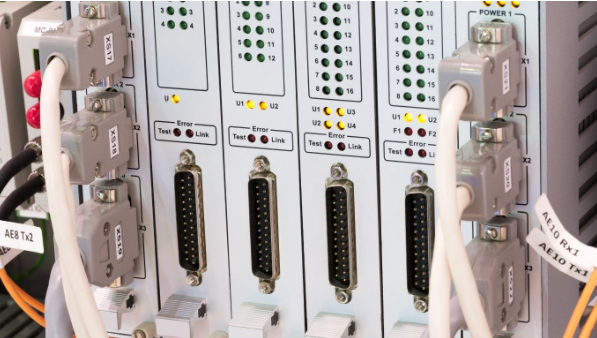
Programmable Logic Controllers (PLCs) play a vital role in modern industrial automation networks by enabling reliable control, monitoring, and data exchange between devices. Effective communication protocols ensure seamless integration between controllers, sensors, actuators, Human-Machine Interfaces (HMIs), and supervisory systems. This article explores the most commonly used PLC communication protocols and their importance in industrial automation, while also highlighting the role of the module 140dao84010 in automation environments.
Introduction to PLC Communication in Industrial Networks
Industrial automation systems rely on real-time data exchange to maintain efficiency, accuracy, and safety. PLC communication protocols define how devices connect and share information over wired or wireless networks. These protocols ensure compatibility between equipment from different manufacturers and support scalable system integration.
Modern industrial facilities often use advanced communication modules like 140dao84010 to enhance connectivity and improve system performance. Such modules help integrate input/output signals into centralized control architectures.
Common PLC Communication Protocols
Modbus Protocol
Modbus is one of the most widely used communication protocols in industrial automation. It supports serial and Ethernet communication and enables data exchange between master and slave devices.
Key features include:
- Simple implementation
- High compatibility with various devices
- Reliable data transmission
- Supports Modbus RTU and Modbus TCP
Modbus is commonly used in PLC systems to connect remote I/O modules and field devices efficiently.
Profibus Protocol
Profibus is a popular fieldbus communication protocol used in factory automation and process industries. It provides fast and reliable communication between PLCs and distributed devices.
Advantages include:
- High-speed data transfer
- Deterministic communication
- Suitable for complex automation systems
- Supports large network configurations
Profibus is ideal for applications requiring real-time control and synchronization.
Profinet Protocol
Profinet is an industrial Ethernet-based protocol designed for high-speed communication. It integrates seamlessly with PLC systems and supports advanced automation networks.
Key benefits:
- Ethernet-based communication
- High data throughput
- Real-time control capability
- Easy integration with IT systems
Profinet is widely used in modern smart factories and digital manufacturing environments.
Ethernet/IP Protocol
Ethernet/IP is an industrial protocol based on standard Ethernet technology. It allows seamless communication between PLCs, drives, sensors, and controllers.
Important features:
- Open communication standard
- Supports real-time data exchange
- Scalable network architecture
- Easy integration with enterprise systems
This protocol is commonly used in automated production lines and control systems.
Role of I/O Modules in PLC Communication
I/O modules play a crucial role in connecting field devices to PLC controllers. They convert physical signals into digital data that the PLC can process.
Modules like 140dao84010 are designed to manage digital output signals efficiently within industrial systems. These modules help control actuators, relays, and other output devices while ensuring accurate signal transmission.
Key Functions of 140dao84010
The module 140dao84010 typically supports:
- Digital output control
- Integration with PLC backplane systems
- Reliable signal processing
- Industrial-grade performance
Such modules enhance automation efficiency by ensuring smooth communication between control systems and field devices.
Importance of Communication Protocols in Automation
Improved System Integration
Communication protocols allow different devices to work together within a unified automation network. PLCs can communicate with sensors, actuators, and supervisory control systems without compatibility issues.
Real-Time Monitoring and Control
Industrial processes require continuous monitoring. Protocols such as Profinet and Profibus provide real-time data exchange, enabling operators to control processes accurately and respond to system changes quickly.
Enhanced Data Management
Modern automation systems collect large volumes of operational data. Communication protocols ensure efficient data transfer from PLCs to centralized servers or cloud platforms for analysis and reporting.
Increased Operational Efficiency
Reliable communication reduces downtime and minimizes errors. Using advanced modules like 140dao84010, industries can achieve stable output control and better system performance.
Industrial Applications of PLC Communication Protocols
Manufacturing Industry
In manufacturing plants, PLC protocols connect robotic arms, conveyor systems, and production machines. This integration ensures coordinated operation and optimized production flow.
Oil and Gas Industry
Communication networks monitor pressure, temperature, and flow rates in real time. Reliable protocols help maintain safe operations in harsh environments.
Power Generation Plants
PLC networks manage turbines, generators, and distribution systems. Fast communication is essential for maintaining grid stability and efficient energy management.
Water Treatment Facilities
Automation systems control pumps, valves, and filtration equipment. Communication protocols enable centralized monitoring and remote control of critical processes.
Advantages of Using Advanced PLC Modules
Integrating high-performance modules such as 140dao84010 into automation systems provides several advantages:
- Accurate digital output management
- Improved signal reliability
- Easy installation in modular PLC systems
- Compatibility with industrial communication networks
- Reduced wiring complexity
These benefits make such modules essential components in modern industrial automation architectures.
Future Trends in PLC Communication
Industrial automation is evolving with Industry 4.0 technologies. Future communication networks will focus on:
- Increased adoption of Ethernet-based protocols
- Cloud connectivity integration
- Artificial Intelligence-based monitoring
- Enhanced cybersecurity features
- Wireless industrial communication expansion
Modules like 140dao84010 will continue playing a significant role by supporting advanced control architectures and network integration.
Conclusion
PLC communication protocols form the backbone of industrial automation networks. Protocols such as Modbus, Profibus, Profinet, and Ethernet/IP enable efficient data exchange and system integration across various industrial sectors.
The integration of reliable hardware components like 140dao84010 enhances digital output control and strengthens overall network performance. By combining advanced communication protocols with robust PLC modules, industries can achieve higher efficiency, improved reliability, and scalable automation solutions.
As technology continues to advance, communication systems will remain a critical factor in optimizing industrial operations and supporting smart manufacturing environments.