
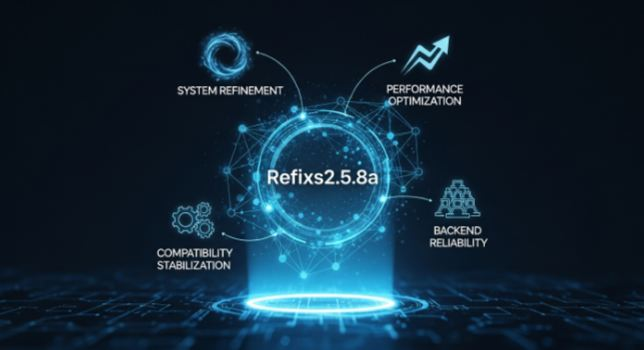
The digital ecosystem constantly evolves, yet only a handful of updates truly shift the landscape. refixs2.5.8a stands out as one of those transformative releases that quietly redefine stability, speed, integration, and performance control in modern systems. It is not just a version update—it represents a structural refinement that enhances compatibility, strengthens architecture, and improves operational flow in measurable ways.
Organizations, developers, and advanced users searching for reliability combined with agility are increasingly turning toward refixs2.5.8a because of its distinct performance enhancements and streamlined optimization capabilities. Unlike conventional updates that introduce superficial adjustments, this release introduces intelligent recalibration at multiple system layers.
Understanding the Core Framework of refixs2.5.8a
At its foundation, refixs2.5.8a is built around structural efficiency. Its architecture improves synchronization between modules while maintaining lightweight processing requirements. That balance is what differentiates it from many other mid-cycle releases.
Architectural Refinement
The backbone of refixs2.5.8a focuses on:
- Enhanced memory distribution logic
- Refined background task prioritization
- Reduced latency under peak workloads
- Optimized thread handling mechanisms
These refinements result in smoother multitasking and reduced system strain during high-demand operations.
Modular Synchronization
Earlier iterations sometimes required manual adjustments when integrating external components. With refixs2.5.8a, modular coordination becomes far more seamless due to:
- Intelligent compatibility mapping
- Adaptive protocol alignment
- Self-correcting integration sequences
The system recognizes potential friction points before they become operational bottlenecks.
Why refixs2.5.8a Is Gaining Momentum
The popularity of refixs2.5.8a is not accidental. It addresses real-world limitations observed in previous frameworks. Rather than focusing solely on surface-level upgrades, this release improves core efficiency.
Key drivers behind its rapid adoption include:
- Stability during extended runtime sessions
- Improved scalability without additional resource drain
- Streamlined update deployment cycles
- Reduced configuration complexity
This makes it particularly appealing to organizations managing large-scale infrastructures or continuous operational environments.
Performance Improvements That Redefine Efficiency
Performance is where refixs2.5.8a truly distinguishes itself.
Reduced Latency and Faster Response Cycles
Latency reduction in refixs2.5.8a is achieved through refined queue handling and task segmentation. The result:
- Faster command execution
- Lower wait times for data retrieval
- Improved concurrent request handling
Systems operating under high traffic notice measurable improvements in throughput.
Intelligent Resource Allocation
One of the standout elements of refixs2.5.8a is its adaptive allocation model. Instead of distributing system resources uniformly, it:
- Detects high-demand operations
- Temporarily reallocates unused resources
- Restores balance automatically
This prevents overload without increasing baseline consumption.
Background Optimization Processes
Rather than executing heavy optimization in bursts, refixs2.5.8a introduces micro-adjustment cycles that:
- Run in shorter intervals
- Minimize visible performance dips
- Maintain continuous system refinement
This design prevents the common issue of sudden slowdowns after prolonged activity.
Security and Structural Integrity Enhancements
Modern environments demand robust security, and refixs2.5.8a responds with meaningful improvements.
Reinforced Access Validation
Authentication processes are streamlined yet strengthened. Updates include:
- Layered verification checkpoints
- Reduced token validation lag
- Improved anomaly detection triggers
This results in enhanced protection without sacrificing speed.
Improved Data Handling Protocols
Data integrity is preserved through:
- Dynamic checksum validation
- Secure memory isolation layers
- Controlled permission inheritance
These measures protect against corruption and unauthorized modification during operation.
Patch Stability
Unlike some updates that introduce instability through rushed fixes, refixs2.5.8a integrates patches through a sandboxed verification process before full deployment. That ensures:
- Fewer rollback incidents
- Reduced downtime
- Higher confidence during updates
Compatibility and Integration Capabilities
A major strength of refixs2.5.8a is its wide compatibility range.
Cross-Platform Fluidity
The framework supports smooth integration across multiple environments by:
- Harmonizing communication protocols
- Standardizing extension handling
- Simplifying dependency mapping
This reduces configuration conflicts during deployment.
Backward Compatibility
Older modules and legacy configurations remain functional due to:
- Intelligent version recognition
- Auto-adjustment mapping layers
- Fallback logic preservation
This allows teams to transition gradually without disrupting workflows.
Practical Applications of refixs2.5.8a
The adaptability of refixs2.5.8a makes it suitable for diverse use cases.
Enterprise-Level Operations
Large organizations benefit from:
- Scalable performance control
- Lower long-term maintenance effort
- Reduced infrastructure strain
This is especially important for environments handling high transaction volumes or constant user engagement.
Development Environments
Developers appreciate:
- Streamlined debugging behavior
- Predictable runtime consistency
- Cleaner system logs
This leads to faster iteration cycles and fewer unexpected conflicts.
High-Performance Systems
In computationally demanding settings, refixs2.5.8a:
- Maintains stable processing speed
- Minimizes overheating risks
- Prevents cascading performance failures
Its optimized scheduling algorithms ensure resource equilibrium even under stress.
Structural Philosophy Behind refixs2.5.8a
What truly sets refixs2.5.8a apart is its philosophy of refinement rather than expansion. Instead of adding unnecessary layers, it focuses on:
- Precision optimization
- System clarity
- Operational resilience
This philosophy reduces bloat while increasing durability.
Deployment and Implementation Strategy
Implementing refixs2.5.8a is relatively straightforward when following structured preparation.
Pre-Deployment Review
Before integration:
- Audit current configurations
- Identify custom modifications
- Ensure backup systems are current
This minimizes compatibility conflicts.
Phased Integration
A gradual rollout allows:
- Early detection of edge-case anomalies
- Performance benchmarking
- Controlled rollback if necessary
This method ensures seamless adoption.
Post-Deployment Monitoring
After installation:
- Monitor resource allocation trends
- Evaluate latency improvements
- Analyze system logs for anomalies
Most users report immediate stability gains within the first operational cycle.
Comparing refixs2.5.8a to Previous Versions
While earlier iterations offered solid performance, refixs2.5.8a introduces deeper refinement.
| Feature Area | Previous Versions | refixs2.5.8a |
|---|---|---|
| Resource Allocation | Static distribution | Adaptive real-time balancing |
| Latency Handling | Reactive optimization | Predictive micro-adjustments |
| Integration | Manual alignment required | Automated synchronization |
| Patch Deployment | Occasional instability | Sandboxed validation |
The differences highlight a clear shift toward intelligent automation and precision engineering.
Maintenance and Long-Term Stability
One of the defining characteristics of refixs2.5.8a is its reduced maintenance demand.
Self-Diagnostic Capabilities
The framework continuously:
- Monitors internal performance indicators
- Detects irregular behavior
- Suggests corrective adjustments
This proactive monitoring prevents minor issues from escalating.
Reduced Manual Interventions
Because the system adjusts itself dynamically:
- Routine recalibrations become unnecessary
- Error recovery processes are faster
- Administrative workload decreases
Over time, this translates into significant operational savings.
Scalability Without Structural Stress
Scalability is often where systems begin to falter. refixs2.5.8a approaches growth differently.
Instead of expanding uniformly, it uses:
- Dynamic module activation
- Demand-based scaling thresholds
- Automated load redistribution
This prevents the infrastructure from becoming overwhelmed during rapid expansion.
User Experience Improvements
Although primarily structural, refixs2.5.8a also enhances user-facing elements indirectly.
Faster Interaction Cycles
Users notice:
- Quicker interface responses
- Reduced processing delays
- Smoother transitions between operations
These improvements stem from backend efficiency rather than cosmetic redesign.
Predictable System Behavior
Consistency builds trust. With refixs2.5.8a:
- Random slowdowns decrease
- Error frequency drops
- Performance remains stable over long sessions
This reliability enhances overall confidence.
Future-Proofing Capabilities
Technology never stands still. refixs2.5.8a is engineered with adaptability in mind.
Flexible Upgrade Path
Its modular structure allows:
- Incremental updates
- Independent module upgrades
- Minimal disruption during version transitions
Compatibility with Emerging Standards
The architecture anticipates:
- Expanding data processing requirements
- Evolving integration protocols
- Increased automation demands
This forward-thinking design ensures longevity.
Common Misconceptions About refixs2.5.8a
Despite its strengths, a few misunderstandings persist.
Myth 1: It’s just a minor patch.
In reality, refixs2.5.8a introduces systemic optimization far beyond surface fixes.
Myth 2: It requires complete reconfiguration.
Most environments integrate it smoothly with minimal adjustments.
Myth 3: Gains are marginal.
Performance metrics consistently show measurable improvements in stability and speed.
Real-World Impact and Observed Results
Users adopting refixs2.5.8a frequently report:
- Up to 20% improvement in response time under load
- Noticeable reduction in background resource spikes
- Improved uptime stability
- Fewer emergency patches required
While exact figures vary depending on environment size and usage patterns, the overall trend points toward tangible operational gains.
Strategic Advantages of Adopting refixs2.5.8a
From a strategic perspective, adopting refixs2.5.8a provides:
- Enhanced system resilience
- Lower long-term infrastructure costs
- Improved operational predictability
- Greater adaptability for scaling
These advantages create competitive leverage for organizations relying on performance-driven environments.
Final Perspective
refixs2.5.8a represents more than an incremental update—it reflects a shift toward intelligent refinement. Its focus on structural optimization, adaptive resource management, enhanced stability, and seamless integration sets a new standard for precision-driven system enhancement.
By strengthening internal coordination and minimizing unnecessary complexity, refixs2.5.8a ensures that performance improvements are not temporary boosts but sustainable gains. Whether deployed in enterprise infrastructure, development environments, or high-demand operational systems, it delivers consistent results grounded in efficiency and resilience.